
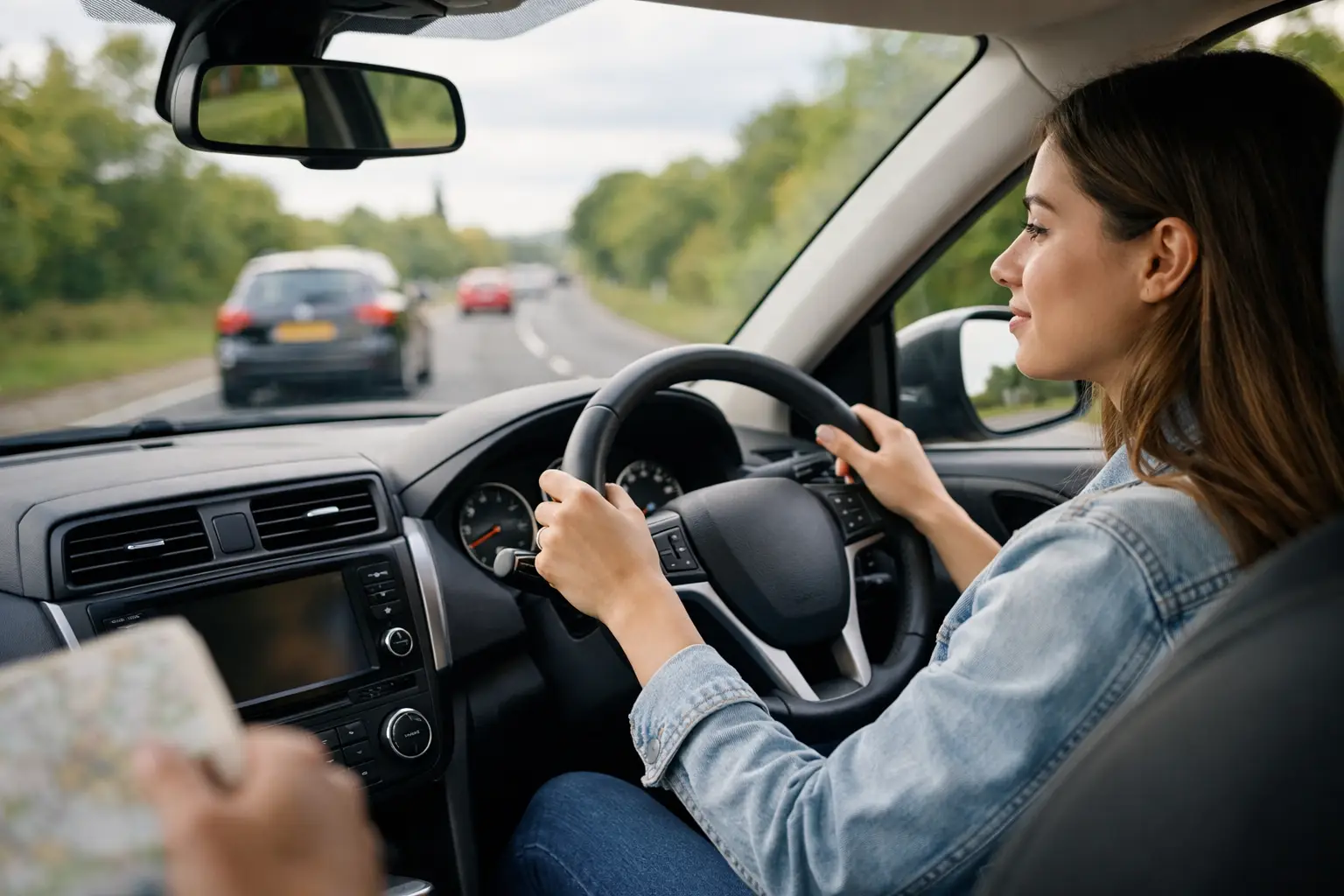
Your first few drives can feel like a lot. Mirrors, pedals, signs, gears, cyclists, roundabouts - and somehow you are also expected to stay calm and make good decisions. The good news is that the best driving habits for beginners are not flashy skills. They are small, repeatable behaviours that make driving feel simpler, safer and far less stressful.
Good habits matter because they reduce the number of things you need to think about in the moment. Instead of reacting late or second-guessing yourself, you start to spot issues earlier, position the car better and make smoother choices. That is how confidence grows properly - not by being brave for five minutes, but by being consistent every time you drive.
Best driving habits for beginners start before the engine does
One of the biggest beginner mistakes happens before the car even moves. You get in, feel slightly nervous, want to get going, and rush the setup. That usually leads to poor visibility, awkward steering and a feeling that the car is somehow fighting back.
Take twenty seconds and set yourself up properly. Adjust the seat so you can press the pedals fully without stretching. Set the mirrors so you are not guessing what is behind you. Check your steering position and make sure you can see clearly through the windscreen. If you drive a manual, make sure you are comfortable with the bite point before you move away. It sounds basic because it is basic - and basic is what keeps you in control.
This is also the moment to settle your mind. If you are flustered before you begin, the drive usually feels busier than it really is. A calm start often leads to a calmer lesson or journey.
Look well ahead, not just at the bonnet
Beginners often focus too close to the front of the car. It makes sense at first because you want to keep the car in the right place. The problem is that short-range vision gives you less time to plan.
Try to keep your eyes moving and look further up the road. Notice parked cars, traffic lights, pedestrian crossings, bends and side roads early. If a hazard appears ahead, you can ease off the accelerator smoothly instead of braking sharply at the last second. Passengers prefer it, your instructor prefers it, and your nerves will prefer it too.
This habit becomes especially useful in busier areas where things change quickly. In Peterborough, for example, a straightforward road can suddenly involve a roundabout, a cyclist and a car pulling out all at once. Looking ahead buys you time, and time is one of the best safety tools you have.
Keep your mirrors active
Mirror checks should not be a performance for the examiner. They should be part of your thinking. Before changing speed, changing direction or changing position, use your mirrors to build a picture of what is around you.
That does not mean staring at them every three seconds like a meerkat on patrol. It means using them purposefully. A quick interior mirror check before slowing down, a side mirror before turning, and a proper check before moving out can prevent poor decisions. Over time, this stops feeling like a separate task and becomes part of one continuous routine.
Use speed as a tool, not a target
New drivers sometimes treat the speed limit as a number they must reach. That is not how safe driving works. The limit is the maximum permitted speed in good conditions, not a command.
One of the best habits you can build is choosing a speed that matches the road, the weather and what you can see. On a narrow residential street with parked cars on both sides, 30 mph may be legal but not sensible. Near schools, crossings or busy junctions, a slightly gentler approach often gives you better control and more time to react.
On the other hand, driving much too slowly can also create problems if it holds up traffic or shows uncertainty where a clear decision is needed. The skill is balance. You want to be steady, legal and appropriate for the situation.
Leave more space than you think you need
Space is your safety cushion. If the driver in front brakes suddenly and you are too close, your options shrink fast. If you leave a healthy gap, you have time to respond calmly.
A simple rule is the two-second gap in dry conditions, and more in rain, darkness or heavy traffic. Beginners sometimes close gaps because they worry another car will slip in. Sometimes one does. Let it. Protecting your stopping distance matters more than defending a patch of tarmac.
The same thinking applies at junctions and roundabouts. Do not creep forward just because the driver behind seems impatient. Wait until you can go safely and with control. Rushed decisions are where many beginner errors start.
Smooth inputs make better drivers
You do not need to drive like you are carrying a wedding cake, but smoothness matters. Gentle steering, progressive braking and controlled acceleration make the car easier to manage and easier to predict.
Jerky inputs are usually a sign that the driver is reacting late. If you are braking sharply all the time, ask yourself whether you are spotting hazards early enough. If your steering feels rushed, you may be approaching bends too quickly or not planning your position soon enough.
For manual learners, smoothness includes clutch control and gear changes. Do not chase perfection in the first week. Aim for better timing and less panic. A stall is not the end of civilisation. It is just feedback with a soundtrack.
Build one routine for junctions and roundabouts
Junctions and roundabouts can feel intimidating because so much happens at once. The easiest way to reduce stress is to use the same routine every time. Slow down in good time, choose the right gear, observe carefully, and only go when you are sure.
Having a routine helps because it stops you inventing a new method on every approach. That is often where nerves creep in. When your process stays the same, your confidence grows because you know what comes next.
Best driving habits for beginners at busy decision points
At roundabouts, beginners often focus so much on finding a gap that they forget lane discipline and signalling. Both matter. If you are in the wrong lane or signal late, even a safe gap can turn into a messy manoeuvre.
Give yourself time to read the road markings early. If you are not sure, do not make a wild last-second move. It is usually safer to continue around or take the next suitable route than to cut across lanes. Missing a turn is inconvenient. Causing confusion is worse.
Expect people to do odd things
A surprisingly useful driving habit is mild scepticism. Not paranoia, just healthy caution. Assume a pedestrian might step out while looking at their mobile phone. Assume a parked car door might open. Assume another driver might signal late, drift wide or hesitate when you expected them to go.
This mindset keeps you alert without making you fearful. It helps you prepare for the small surprises that are completely normal on real roads. Experienced drivers do this without thinking. Beginners can practise it deliberately.
That said, do not let caution turn into indecision. Safe driving is not about expecting disaster at every corner. It is about staying ready and making measured choices.
Keep talking yourself through the drive
When you are learning, a quiet commentary in your own head can be incredibly helpful. Something as simple as, "mirror, signal, slow down, second gear, look right, look ahead" keeps your attention organised.
This is not just for lessons. It works when practising in your own time as well. Talking yourself through the routine helps stop nerves from filling the silence with nonsense like, "What if I ruin this roundabout and end up in another county?"
As your experience grows, the commentary fades naturally. Until then, it is a solid way to stay focused.
Learn from each drive, but do not over-dramatise mistakes
Every beginner makes mistakes. You will miss a gear, brake a bit late, hesitate at a junction or forget a signal now and then. The goal is not to become flawless overnight. The goal is to notice the pattern and improve it.
After each lesson or practice drive, pick one or two things to reflect on. Maybe your observations were stronger, but your positioning needs work. Maybe your clutch control was good, but you rushed roundabouts. Small, honest reviews lead to steady progress.
What does not help is replaying every wobble like a motoring crime documentary. One untidy move does not mean you are a bad driver. It means you are learning.
Confidence comes from habits, not luck
The drivers who look calm are rarely relying on talent alone. They have built habits that support good decisions. They check mirrors without fuss, leave space without being told and adjust to the road instead of arguing with it.
That is why patient, personalised tuition makes such a difference. A good instructor will not just tell you what went wrong. They will help you build the routines that make things go right more often. At D4Driving School of Motoring, that step-by-step progress is exactly what turns nervous first lessons into steady, test-ready driving.
If you are a beginner, focus less on trying to look experienced and more on repeating the right habits until they feel natural. Confidence usually arrives quietly, somewhere between your fifteenth mirror check and the moment a busy junction no longer feels like a personal challenge from the universe.