
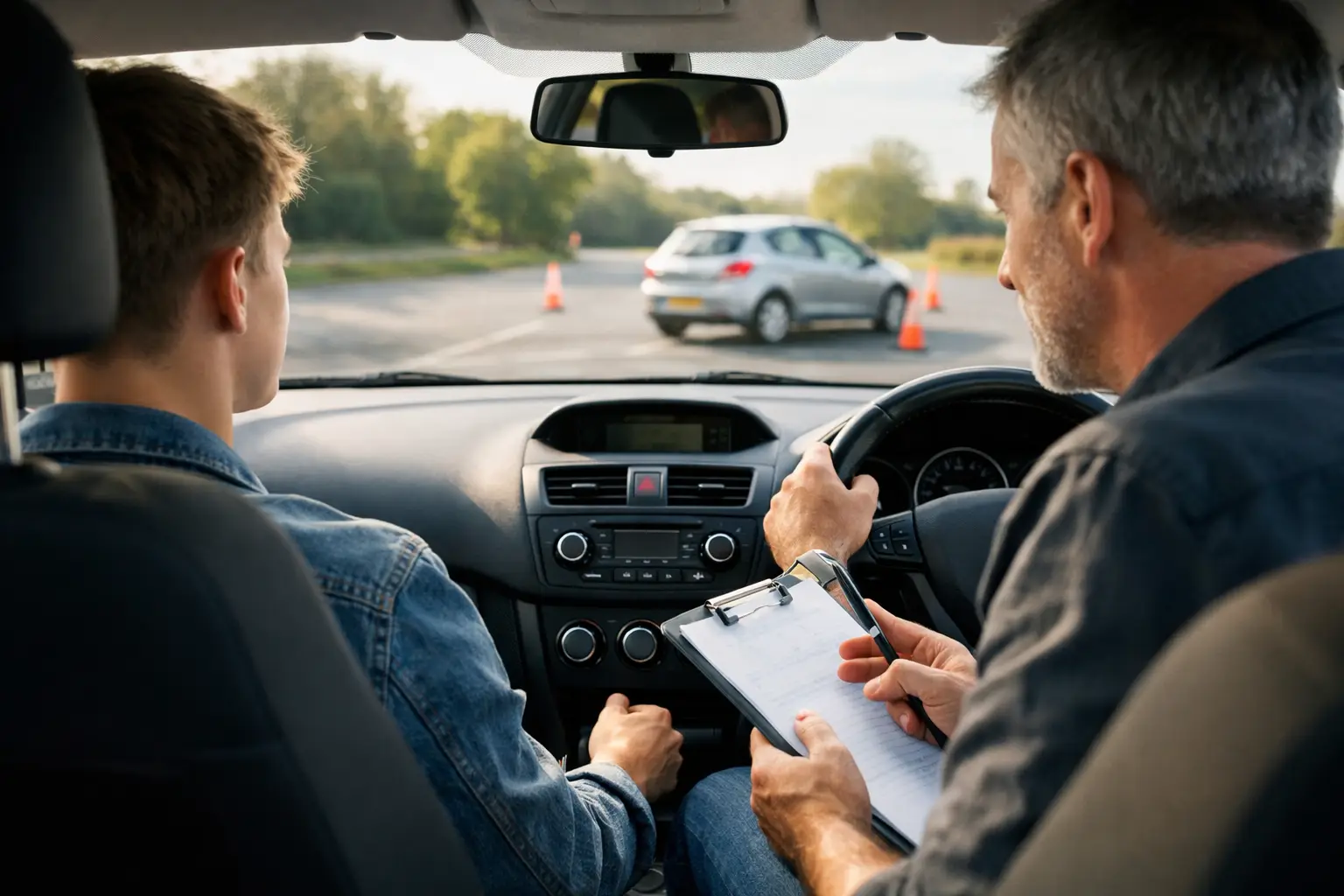
That first lesson can feel like a lot. You are suddenly in charge of mirrors, pedals, signs, other road users and a car that seems determined to do three things at once. The good news is that the best first skills for learner drivers are not flashy or complicated. They are the steady, practical habits that make everything else easier.
If you start with the right foundations, your progress tends to feel calmer and more predictable. You are not trying to impress anyone in lesson one. You are learning how to stay safe, stay in control and build confidence one skill at a time.
What makes the best first skills for learner drivers?
The strongest early skills all have one thing in common - they reduce pressure. They give you more time to think, help you spot problems earlier and make the car feel less intimidating.
That matters because beginner nerves are normal. Some learners are worried about stalling. Others are more anxious about traffic, roundabouts or making a mistake in front of people. A good first set of skills does not remove every wobble, but it gives you a reliable base to work from.
1. Setting up the car properly
Before the engine even becomes the main event, seat position, mirrors and steering grip matter more than many learners expect. If you are too close, too far back or stretching for the pedals, everything feels harder. Braking can become jerky, steering feels awkward and your observations suffer because you are uncomfortable.
A proper set-up gives you control straight away. You should be able to reach the pedals comfortably, see clearly through the windscreen and mirrors, and hold the wheel without tension in your shoulders. It is not the glamorous part of learning to drive, but it is one of the smartest places to start.
For nervous learners, this also creates a useful routine. When you begin each lesson the same way, the car starts to feel familiar rather than overwhelming.
2. Smooth clutch control and pedal balance
In a manual car, clutch control is usually one of the first big hurdles. In an automatic, the same idea still applies in a different way - learning gentle control through the pedals rather than treating them like on-off switches.
New drivers often think speed is the challenge. Usually, smoothness is the real issue first. If your clutch comes up too quickly, the car stalls. If the brake goes down too sharply, everyone lurches forward like a shopping trolley with a wonky wheel.
That is why early practice should focus on feel. How the car responds. Where the biting point sits. How lightly you can press the accelerator and still move away cleanly. These are the small physical skills that make a huge difference to confidence.
3. Moving off and stopping safely
This is one of the best first skills for learner drivers because it appears in almost everything that follows. If you can move off under control and stop the car smoothly in the right place, you already have two essential building blocks for normal road driving.
Moving off is not just about getting the car rolling. It also includes preparing properly, checking all around, signalling when needed and choosing the right moment. Stopping safely means more than pressing the brake. It means planning ahead, braking in good time and finishing with control.
These skills are especially important in quiet residential roads, where lessons often begin. The speed may be lower, but parked cars, junctions and pedestrians mean there is still plenty to think about.
4. Observations that become a habit
A learner can do many things reasonably well and still struggle if observations are rushed or inconsistent. Good observation is one of the biggest separators between a tense beginner and a driver who is starting to feel settled.
At first, this means learning where to look and when. Mirrors before changing speed or direction. Looking ahead, not just at the bit of road in front of the bonnet. Checking side roads, parked cars, cyclists and people who may step out without warning.
This is also where patience in teaching really matters. Many learners are not careless. They are simply overloaded. Once the basic car control improves, observations usually improve with it. That is why lessons should build in a sensible order rather than trying to cram everything into one session.
5. Steering with control, not panic
Steering sounds simple until the road bends, another car appears and your hands suddenly forget how circles work. Early steering practice is about keeping the car positioned safely and making steady decisions, not spinning the wheel like you are in an action film.
Learners often oversteer because they are looking too close ahead. The fix is usually not stronger arms. It is better vision and calmer timing. When you look further up the road, your steering tends to smooth out naturally.
There is also a trade-off here. Some learners pick up steering quickly but need more time on speed control. Others are the opposite. That is normal. Progress is rarely perfectly even, which is why tailored lessons make such a difference.
6. Using mirrors for meaning, not just routine
It is easy to teach mirrors as a tick-box exercise. Check mirror, move on, job done. But the real skill is understanding what the mirror information means.
If a car is close behind, your braking may need to be earlier and smoother. If a cyclist is approaching on the left, turning left becomes a very different decision. If the road behind is clear, you may have more space to adjust calmly.
This takes time to develop because it is not only about looking. It is about interpreting what you see. Early lessons should help learners connect the mirror check with the decision that follows. Once that clicks, driving starts to feel far less random.
7. Judging speed and space
Many new drivers worry about gear changes or clutch control, but judging speed and space is what really helps you relax on the road. Can you approach a junction slowly enough to assess it properly? Can you leave enough room around parked vehicles? Can you recognise when a gap is safe and when it is better to wait?
This is not about being timid. It is about learning good judgement. A lot of beginner stress comes from rushing decisions. The car behind may feel impatient, but your job is not to entertain them. Your job is to make safe, sensible choices.
In places such as Peterborough, where learners may meet a mix of residential roads, busier routes and roundabouts, this skill becomes especially useful. It helps you adapt rather than freeze when the road picture changes.
8. Staying calm after a mistake
This may not sound like a driving skill, but it absolutely is. Learners stall. They miss a gear. They approach a junction too quickly once and learn from it. None of that means they are poor drivers. It means they are learning.
What matters is what happens next. If one small error turns into panic, the rest of the lesson can unravel. If you can reset, listen, breathe and try again, you improve much faster.
A calm instructor helps, of course, but learners can build this skill too. Treat each mistake as information. Something to practise, not proof that you cannot do it. That shift in mindset often changes everything.
How these first skills come together
The early stages of driving are not about mastering every road type straight away. They are about combining a handful of core skills until they start working together. Good set-up supports better control. Better control frees up your attention. More attention improves your observations. Better observations lead to safer decisions.
That is why the first lessons should feel structured, not chaotic. A personalised approach matters because a confident 17-year-old in a manual car may need something very different from an adult learner returning to driving in an automatic. One may need help slowing down mentally. The other may need reassurance that they are not behind.
At D4Driving, that learner-by-learner approach is what makes steady progress possible. The goal is not to pile on pressure. It is to help each driver build real skill, at a pace that keeps them safe and moving forward.
Which skill should come first?
It depends slightly on the learner, but most benefit from this order: getting comfortable in the car, basic pedal control, moving off and stopping, then building observations and steering on quiet roads. After that, mirror use, junction work and speed judgement start to make more sense.
There is no prize for doing the hardest thing first. Starting well is about giving yourself early wins that are real, not artificial. Once those foundations are in place, the bigger challenges stop feeling quite so big.
If you are just getting started, remember this: the best drivers were not born knowing how to balance a clutch, read a roundabout or park neatly. They learned by repeating the basics until those basics became second nature. That is where confidence comes from - not from rushing, but from getting the right things right often enough that driving starts to feel normal.