
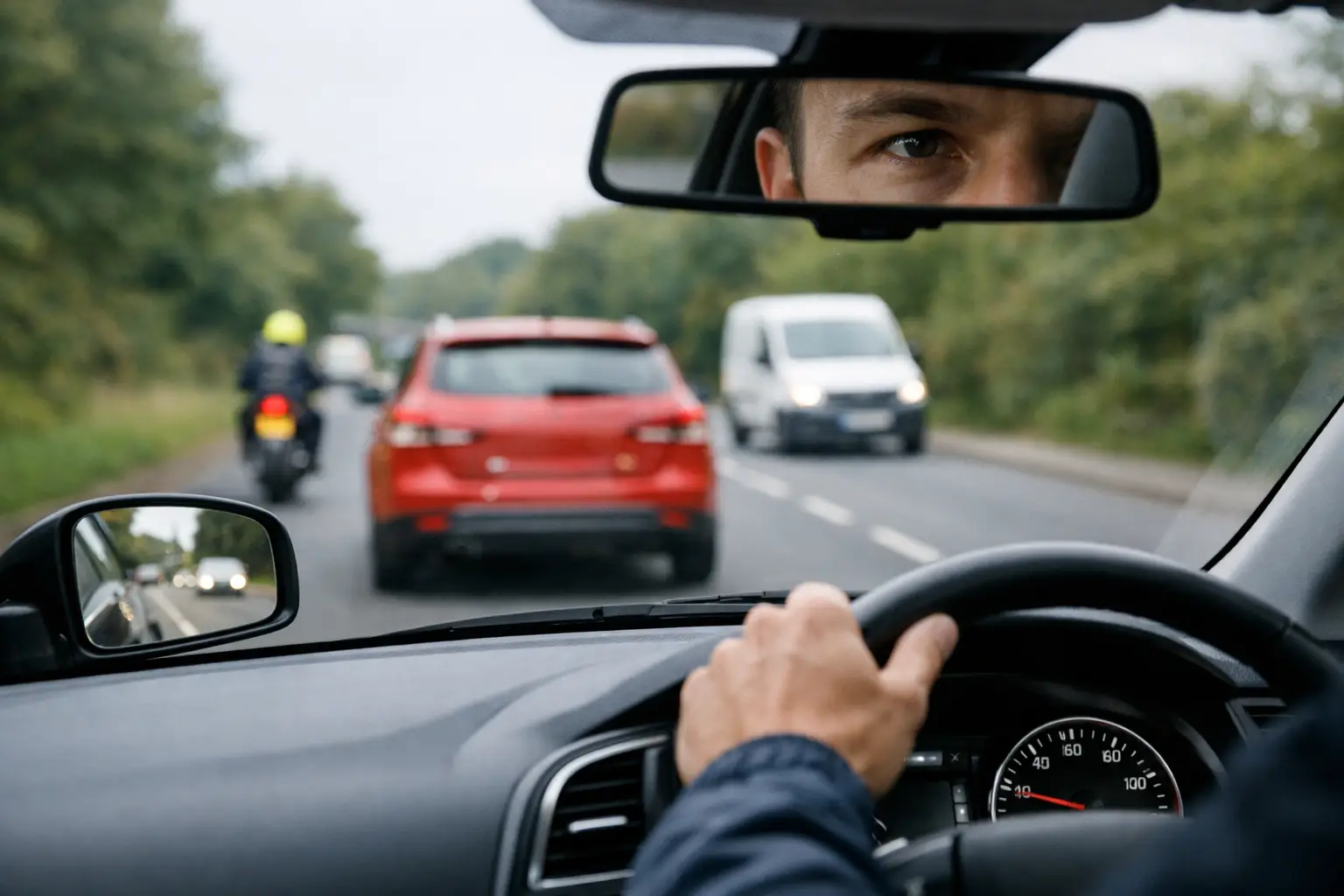
A good drive is rarely about dramatic steering or quick reactions. It is usually won or lost a few seconds earlier, when a driver spots the clue that something may change. The best ways to improve observations are about training your eyes and mind to look ahead, read the road and stay calmly aware - not simply staring harder at everything around you.
For learner drivers, observations can feel like one more thing to remember while working out pedals, gears, mirrors and road signs. That is completely normal. With patient practice, looking properly becomes less of a checklist and more of a natural driving habit. You will feel less surprised by traffic, more in control at junctions and better prepared for your driving test.
Why observations matter more than you think
Observation is the foundation of planning. Before you change direction, slow down, emerge or pull away, you need a clear picture of what is happening around the car. That includes vehicles, cyclists, pedestrians, road markings, signs, weather and the space available to you.
A driving examiner is not looking for someone who snaps their head around every two seconds. They want to see that you gather information at the right time and use it to make safe decisions. A well-timed mirror check before slowing for a roundabout, for example, shows far more awareness than a rushed glance after you have already braked.
The goal is simple: give yourself time. The earlier you see a developing situation, the more gently and safely you can respond. There is no prize for discovering a pedestrian near a crossing at the last possible moment.
1. Look far ahead, not just at the bonnet
Many new drivers naturally focus close to the front of the car. It feels safer because the road immediately ahead seems most urgent. In reality, this can make driving feel rushed because hazards appear too late.
Lift your view well down the road. In town, look beyond the car in front where possible. On faster roads, scan much further ahead for brake lights, changing traffic flow, roadworks or queues. Then bring your attention back closer to check the space in front of you.
This does not mean fixing your eyes on one distant point. Your vision should keep moving between the distance, the road ahead and relevant areas around you. Think of it as reading the road rather than staring at it.
2. Use a steady scanning routine
Strong observation is active. Your eyes should regularly move between the road ahead, mirrors, side roads, pavements and potential hazards. A simple routine prevents tunnel vision, particularly when you are concentrating on a difficult task such as a busy roundabout or meeting parked cars.
Your main focus remains ahead, but your mirrors provide vital updates about what is behind and alongside you. Check them before changing speed or direction, and build regular mirror checks into normal driving. This helps you notice a cyclist moving up the inside, a vehicle following closely or a motorbike filtering through traffic.
Avoid turning a mirror check into a long look. A brief, meaningful glance is enough. Your car is still moving, so the road ahead needs most of your attention.
Know when observations need to be more deliberate
Some situations require a specific sequence of checks. Before moving off, use the full observation routine your instructor has taught you, including blind-spot checks where needed. Before changing lanes, overtaking, turning or pulling up, check mirrors and look where appropriate to ensure the path is clear.
The key is timing. Check early enough to act on what you see, then check again if the situation changes. A clear gap can disappear quickly in traffic.
3. Learn to spot clues, not just hazards
The best drivers are not psychic. They simply notice the small clues that suggest a hazard could develop.
A football near the kerb could mean a child is nearby. A bus at a stop could obscure someone stepping into the road. A parked van may hide an oncoming vehicle, a pedestrian or a car door about to open. Brake lights several vehicles ahead often signal slowing traffic long before the car in front reacts.
Try asking yourself, quietly and without panicking: “What could happen next?” This is not about imagining disasters at every corner. It is about allowing sensible space and preparing for the most likely change.
If you see a potential hazard, adjust early. Ease off the accelerator, increase your following distance or cover the brake where appropriate. Early planning is smoother than harsh braking, and smoother driving is usually safer driving.
4. Give yourself room to see and react
Following too closely reduces what you can observe. The vehicle in front blocks your view, and any hazard becomes their surprise first and yours immediately afterwards.
Use at least the two-second rule in dry conditions, and increase the gap significantly in rain, fog, darkness or on slippery roads. Choose a fixed point, such as a sign or lamp post. When the vehicle ahead passes it, say “only a fool breaks the two-second rule” and make sure you reach that point after you finish the phrase.
Space is not just a safety margin. It is thinking time. It lets you see traffic patterns, read signs and respond progressively instead of making rushed decisions.
5. Slow down your thoughts at junctions
Junctions are where learners often feel overloaded. There may be traffic from several directions, pedestrians crossing, cyclists, road markings and pressure from vehicles waiting behind. The answer is not to hurry. It is to use a clear process.
As you approach, look early for signs, lane markings and the road layout. Check mirrors before reducing speed. At the give-way line, look properly in the directions where traffic could approach and continue assessing as you prepare to move. If your view is restricted, edge forward carefully only when it is safe to do so.
Do not let a driver behind decide when you emerge. They are not taking your test, and they are certainly not responsible for your safety. A short wait for a safe gap is always better than forcing a poor one.
6. Make observations match your speed
The faster you travel, the further ahead you need to look and the more time you need to plan. This matters on dual carriageways, but it also matters on familiar local roads where drivers can become too relaxed.
At 20 mph, you have more time to process a pedestrian near a crossing. At 40 mph, a bend, queue or changing speed limit needs to be noticed much earlier. Match your speed to what you can see, not merely to the number on the sign.
If you cannot see clearly around a bend, over a crest or past parked vehicles, treat the unseen area with caution. You should always be able to stop safely in the distance you can see to be clear.
7. Practise commentary driving on quieter roads
Commentary driving means gently saying what you can see and what you plan to do: “Parked cars ahead, pedestrian near the driver’s door, I’m easing off and checking my mirrors.” It can feel a little odd at first, but it is a brilliant way to make your observation process visible to yourself.
Start on quieter roads with your instructor or an experienced supervising driver. The aim is not to narrate every leaf, lamp post and Labrador. Focus on information that could affect your driving: hazards, road signs, speed changes and safe spaces.
This exercise is especially useful if you often realise afterwards that you saw something but did not act on it. Commentary creates a pause between seeing and doing, which improves planning.
8. Review mistakes without beating yourself up
Missed a sign? Braked late for a queue? Forgot a mirror before changing direction? These moments are useful if you turn them into a specific practice point.
Rather than saying, “My observations are awful”, ask what happened. Were you looking too close to the car? Did you approach too quickly? Were you distracted by changing gear? Once you know the cause, you and your instructor can work on the skill in manageable steps.
At D4Driving School of Motoring, tailored lessons can give you time to practise the situations that make you feel least confident, whether that is busy town driving, roundabouts or approaching a difficult junction. Progress is not about getting every drive perfect. It is about noticing more, earlier, each time you get behind the wheel.
Build the habit one journey at a time
Observations improve through calm repetition. On your next lesson, choose one focus: looking further ahead, checking mirrors earlier or spotting clues around parked cars. Do not try to correct every habit in one hour.
As those small improvements become automatic, driving starts to feel less like juggling and more like planning. You are not just reacting to the road anymore - you are reading it, giving yourself options and driving towards real independence with confidence.