
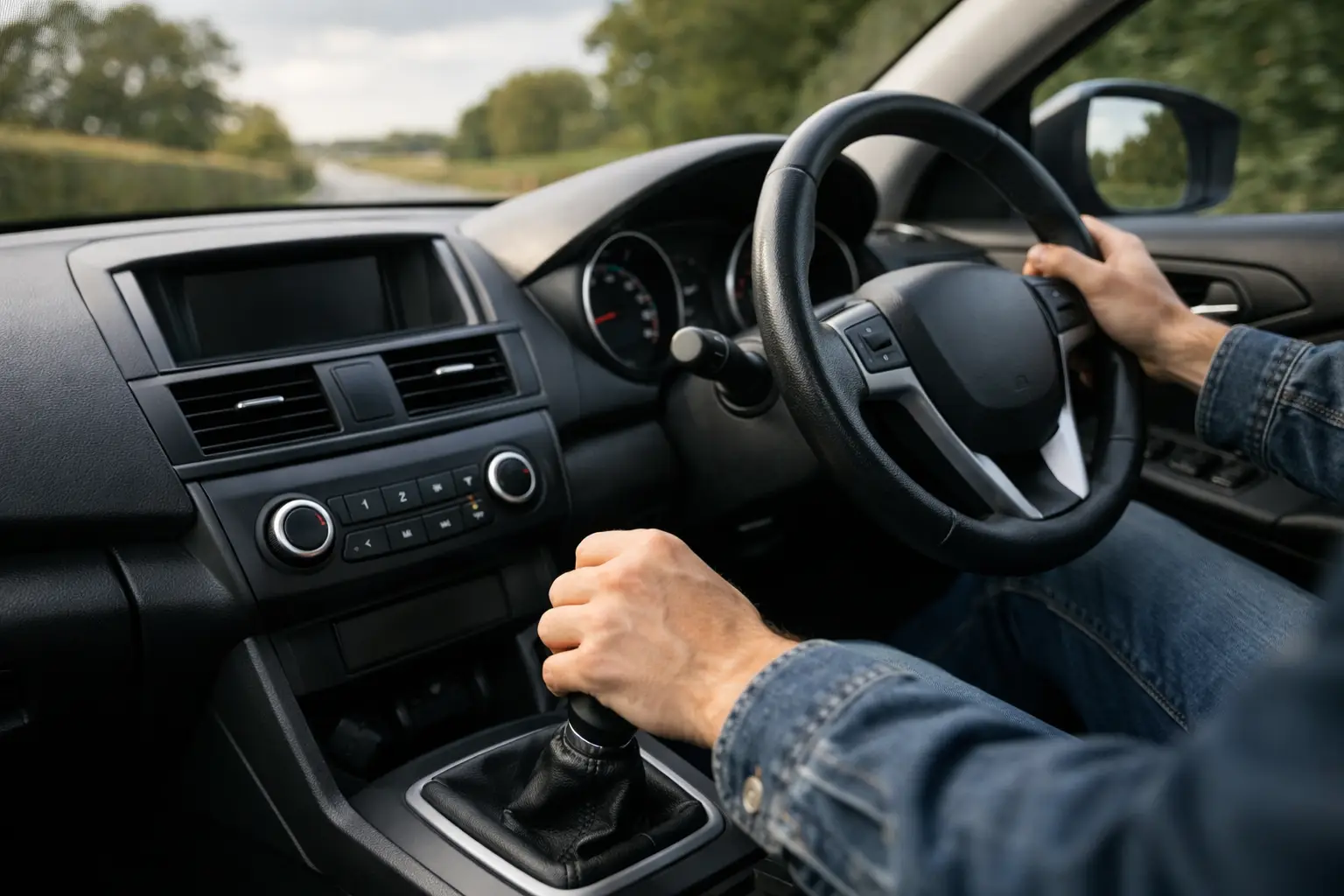
That first moment in a manual car is usually the same for everyone - one foot hovering over the clutch, one hand gripping the gear stick, and one quiet thought: please don’t let me stall in front of everyone. Fair enough. The good news is that this guide to manual driving basics is here to make the whole thing feel much less mysterious and far more manageable.
Manual driving can look busy at first because you are doing more than one thing at once. But it is not magic, and it is not reserved for people who somehow emerged from the womb knowing what a biting point is. It is a skill, and like any skill, it gets easier when you understand what each part is doing and why.
Guide to manual driving basics: what your feet and hands are doing
In a manual car, your left foot is in charge of the clutch, while your right foot shares braking and acceleration. Your left hand usually steers, and your right hand changes gear when needed. That is the simple version. The slightly less simple version is that all of these need to work together smoothly.
The clutch connects the engine to the wheels. Press it down fully and the engine is temporarily disconnected, which allows you to select a gear or come to a stop without the engine cutting out. Lift it too quickly at the wrong moment and the car stalls. Lift it smoothly and the car moves away in a controlled way. That smooth lift is where a lot of beginner confidence is won or lost.
The gear stick selects the gear the car needs for its speed and power. Lower gears give you more pulling power at lower speeds. Higher gears are for travelling more efficiently once the car is moving properly. You do not need to become obsessed with revs on day one. At the start, listen to the car, feel what it is doing, and learn the relationship between speed, engine sound and gear choice.
Starting off without the panic
Moving away is one of the first manual skills that feels awkward, then suddenly doesn’t. To start the car, make sure the handbrake is on, press the clutch fully down, select first gear, and prepare to move off. As you set a little gas, begin lifting the clutch slowly until you feel the biting point - that point where the engine starts to engage with the wheels and the car wants to move.
You may notice the front of the car lift slightly, or hear the engine note change. That is your clue. Hold the clutch briefly at that point, release the handbrake when it is safe, then continue lifting the clutch smoothly as the car moves away. No dramatic flourish needed. Smooth and steady beats fast every time.
If you stall, and most learners do, it is not a disaster. It usually means the clutch came up too quickly, there was not enough gas, or both. Secure the car, restart calmly, and go again. Stalling feels deeply personal for about ten seconds, but it is just part of learning.
Changing gears smoothly
Once the car is moving, you will need to change up through the gears as speed increases. The basic sequence is simple: ease off the accelerator, press the clutch fully down, move to the next gear, then lift the clutch smoothly and return to the accelerator. If the change feels jerky, the timing may be slightly off, but that settles with practice.
Going down the gears works in reverse, but with a bit more care. You do this when slowing down or preparing for hazards such as roundabouts, junctions or tighter bends. A lower gear gives the car better control at lower speed. The common beginner mistake is leaving the gear change too late, then feeling rushed. It is usually better to slow the car first, then select the right gear for the speed you are actually doing.
This is where patience matters. A manual car rewards planning. If you can see well ahead and anticipate what is coming, your gear changes become calmer and cleaner.
Clutch control: the skill that changes everything
If one part of a guide to manual driving basics deserves extra attention, it is clutch control. This is the ability to use the clutch precisely at very low speeds, especially when moving off, creeping in traffic, parking or tackling hill starts.
Good clutch control is not about balancing the car forever at the biting point. It is about recognising when the clutch needs to be brought up gently and when it should be fully released. Beginners sometimes keep the clutch half down for too long because it feels safer. In reality, that can reduce control and wear the clutch unnecessarily.
At very slow speed, especially in queues or during parking, there may be moments when careful clutch use helps you keep the car steady. But once you are clearly moving away, the aim is usually to bring the clutch fully up and drive normally. It depends on the situation, which is why learning with calm, tailored guidance makes such a difference.
Hill starts without rolling backwards
Hill starts are the bit learners worry about most, largely because gravity has terrible timing. The method itself is straightforward when broken down.
Prepare the car in first gear with the handbrake on and the clutch down. Find the biting point while adding a little gas. You should feel the car wanting to pull forward. When you know the car is ready, release the handbrake and continue lifting the clutch smoothly as the car moves off.
The key is preparation, not speed. If you rush the handbrake release before the biting point is properly found, the car may roll back. If you overdo the gas and dump the clutch, you get a dramatic launch that nobody asked for. A controlled hill start should feel deliberate and boring - which, in driving, is often a compliment.
Braking, slowing down and stopping properly
Learners sometimes focus so much on the clutch and gears that braking becomes an afterthought. It should not be. Smooth, early braking makes manual driving easier because it gives you time to choose the right gear and position safely.
When slowing down, brake progressively rather than suddenly whenever possible. If you are coming to a complete stop, press the clutch down before the car begins to struggle, then select first gear when appropriate if you are preparing to move off again. If you are only reducing speed, choose a lower gear that matches the new speed.
One useful habit is to avoid coasting. Coasting means the car is rolling with the clutch down for longer than necessary, or in neutral, reducing your control. The car is most stable when it is in gear and properly connected.
Common mistakes beginners make
Most manual driving mistakes are not serious. They are timing problems. Lifting the clutch too fast, choosing the wrong gear, forgetting to cancel a signal, braking a touch late - these are all normal early-learning moments.
The bigger issue is often tension. Nervous learners tend to rush. They snatch at the gear stick, stamp on pedals and try to do everything at once. Ironically, the fix is usually to slow your actions down. The car responds better when you do.
Another common mistake is looking too close in front of the bonnet. In manual driving, good observation helps everything else. If you look further ahead, you spot hazards earlier, plan your speed better and avoid frantic last-second gear changes.
Building confidence in a manual car
Confidence does not arrive because someone tells you to relax. It grows when the car starts behaving the way you expect it to. That comes from repetition, clear instruction and practice in the right order.
A good lesson should not feel like being thrown in at the deep end. It should feel structured. You learn moving off, then stopping, then gear changes, then junctions, then more complex traffic. Each step builds on the last. That is often why one-to-one tuition works so well for manual learners - your instructor can slow things down, repeat what needs repeating, and adapt the lesson to how you learn best.
For some people, manual is absolutely worth it. You gain more control over the car, and passing in a manual gives you flexibility to drive both manual and automatic vehicles. For others, automatic may suit their needs better, especially if anxiety around clutch control is delaying progress. There is no prize for making learning harder than it needs to be. The right choice depends on your goals, confidence and timeline.
Guide to manual driving basics for test preparation
If you are learning for your practical test, manual skills need to become consistent, not perfect. Examiners are looking for safety, control and sound decision-making. A slightly clunky gear change is less important than staying aware, using the correct speed and keeping the car under proper control.
Practise the basics until they become familiar under pressure. That includes moving off promptly when safe, stopping smoothly, selecting suitable gears for bends and junctions, and handling hill starts with confidence. In busy areas around Peterborough, for example, smooth clutch control and good planning can make everyday driving feel much less stressful.
The aim is not to impress the car. The car is not judging you. The aim is to make safe, calm choices that show you can handle real roads responsibly.
Manual driving gets easier in stages. First it feels like too much. Then it feels possible. Then one day you pull away, change gear, check your mirrors and deal with a roundabout without thinking about every single step. That is when it clicks. Keep it calm, keep it steady, and let progress build the confidence for you.