
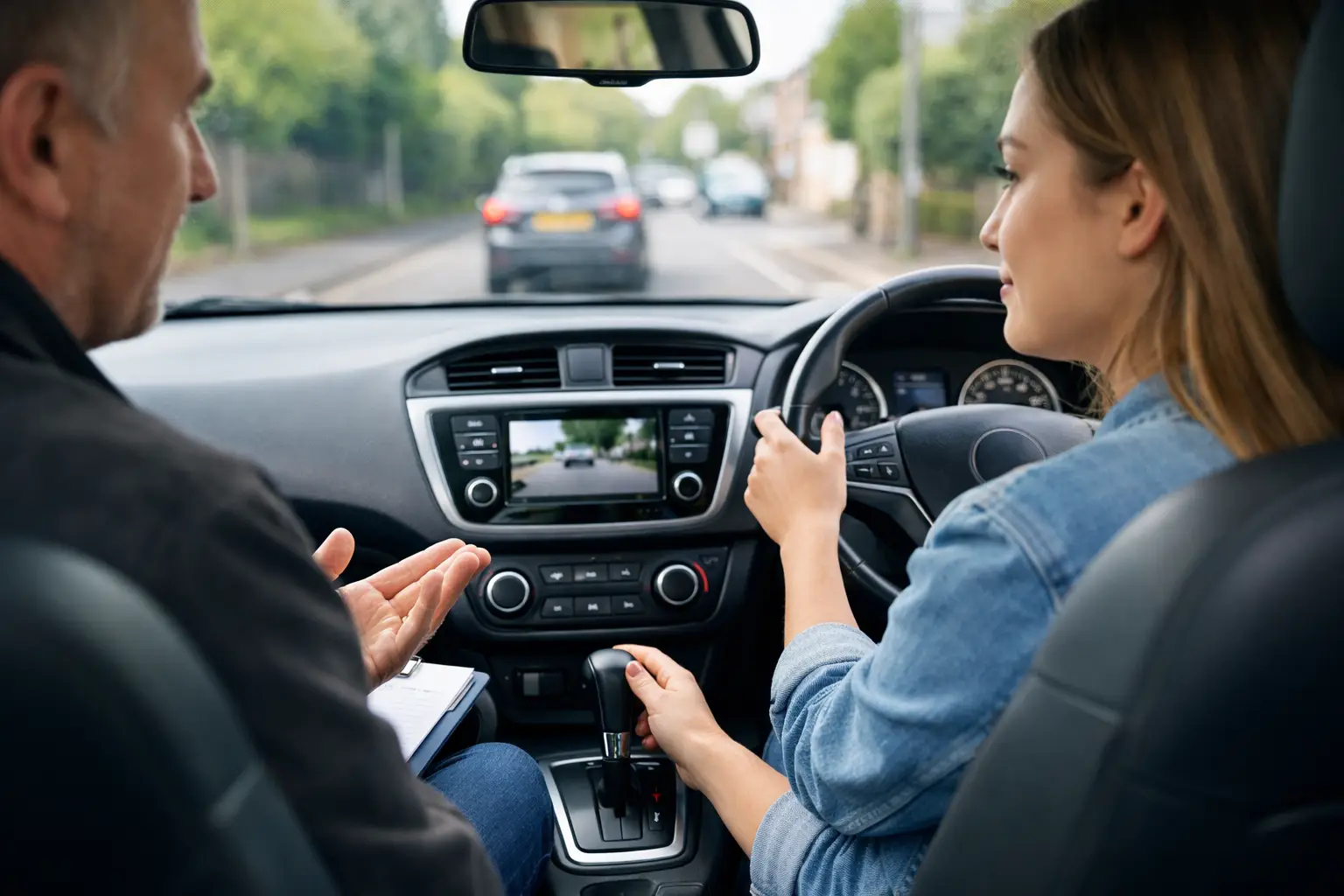
If the thought of clutch control, stalling at a roundabout, and juggling gears makes your palms sweat, you are not overthinking it. A lot of learners ask, are automatic lessons easier for beginners, and the honest answer is yes - for many people, they are. But easier does not always mean better for everyone, so the right choice depends on how you learn, what you want from your licence, and how quickly you want to feel confident behind the wheel.
For some learners, automatic lessons remove the biggest source of early stress. For others, manual lessons feel worth the extra effort because they offer more flexibility later on. The key is not choosing what sounds toughest or cheapest on paper. It is choosing the route that helps you learn safely, steadily, and without turning every lesson into a wrestling match with the gear stick.
Why automatic lessons are easier for beginners
The biggest reason automatic lessons often feel easier is simple. There is less to do.
In an automatic car, you do not need to press a clutch pedal, find the biting point, or change gears as the car speeds up and slows down. That means your attention can go into steering properly, reading road signs, checking mirrors, judging speed, and learning how traffic actually flows. For a complete beginner, that reduced workload can make a huge difference.
Early lessons are usually where nerves are highest. If a learner is already worried about moving off, stopping smoothly, or dealing with a busy junction, adding clutch control can feel like one task too many. Automatic lessons strip out a layer of complexity, which often helps learners settle more quickly.
That matters because confidence is not a fluffy extra in driving. It affects decision-making, observation, and how calmly you respond when the road gets busy. A learner who is not panicking about stalling is often in a better position to build strong habits from the start.
Less multitasking, more road awareness
Beginners do not just learn how to make a car move. They learn how to think like a driver.
That means spotting hazards early, planning ahead, checking mirrors at the right time, keeping a safe position on the road, and reacting without rushing. In an automatic, learners often get to that stage sooner because they are not dividing their attention between road awareness and gear changes.
This is especially helpful for nervous learners, adult beginners, and anyone who tends to feel overloaded when learning new practical skills. If your brain already has enough on its plate, removing one major task can make lessons feel more manageable and more productive.
Are automatic lessons easier for beginners with anxiety?
Very often, yes.
Anxious learners usually do better when lessons feel clear and achievable. If every stop-start in traffic becomes a worry about stalling, rolling back, or picking the wrong gear, anxiety can build quickly. Automatic lessons remove several of those flashpoints.
That does not mean automatic is a magic fix. Learners can still feel nervous about roundabouts, dual carriageways, parking, or the driving test itself. But when the car is simpler to operate, many people feel calmer sooner. That calmer mindset gives more room for learning.
A patient instructor makes a big difference here too. The car type matters, but so does the teaching. A beginner who feels listened to, not rushed, and taught at the right pace will usually progress better whether they choose manual or automatic.
The trade-offs beginners should know
Here is where the answer needs a bit more honesty. Automatic lessons may be easier for beginners, but they are not automatically the right choice.
If you pass your test in an automatic car, your licence only allows you to drive automatics. You cannot then jump into a manual and hope for the best. For some learners, that restriction is no issue at all. More drivers are choosing automatic cars, and with electric vehicles becoming more common, the gap matters less than it used to.
Still, it is worth thinking about your future plans. If you want the option to drive a wider range of cars for work, family, or budget reasons, manual may still be the better long-term choice.
Cost can also vary. In some areas, automatic lessons are priced slightly higher, and automatic test slots or instructor availability may be more limited. That does not always make the overall journey more expensive, though. If a learner reaches test standard in fewer hours because they are progressing faster, the total cost can balance out.
Easier does not mean effortless
There is another point learners sometimes miss. Automatic cars are easier to operate, but driving itself still takes concentration and skill.
You still need to judge speed correctly, approach junctions safely, understand priorities, park accurately, and respond to other road users. Automatic lessons reduce mechanical demands, not the responsibility of driving. So if you choose automatic, do it because it suits your learning style, not because you think it is a shortcut to not having to try.
Who tends to suit automatic lessons best
Automatic lessons often work particularly well for learners who want to build confidence quickly, struggle with coordination under pressure, or need driving to fit around a busy life without dragging the process out.
They can also be a strong choice for adults returning to driving after a long break. If someone already feels rusty or apprehensive, there is no prize for adding extra difficulty. Sometimes the smartest route is the one that gets you safely back on the road with less stress.
Learners with test nerves can benefit too. If the mechanics of the car feel simpler, there is less chance of minor mistakes snowballing into panic. That can make mock tests and real test conditions feel more manageable.
In places with frequent stop-start traffic, automatic cars can also feel much more comfortable to learn in. If your lessons involve busy local roads, queueing traffic, and lots of junction work, not having to constantly change gear can take the edge off.
When manual may still be worth it
Manual lessons still make sense for plenty of beginners.
If you are calm under pressure, enjoy learning technical skills, and want maximum flexibility once you pass, manual could be the better investment. Some learners actually prefer understanding how the car responds through gears and clutch control. Once it clicks, they feel more in control rather than less.
Manual can also be useful if you may need to share cars with family members, buy a cheaper used car, or keep as many job options open as possible. In those cases, a few extra challenges during learning might be worth it.
The truth is that some beginners start in manual and do absolutely fine. Others spend weeks battling the basics and lose confidence when they do not need to. The best choice is not about proving anything. It is about matching the lesson type to the learner.
How to decide what is right for you
If you are torn, ask yourself a few honest questions.
Do you want the simplest path to becoming a safe, confident driver? Do you get overwhelmed when learning several physical tasks at once? Are you mainly focused on passing and driving an automatic car afterwards? If the answer is yes, automatic lessons are probably a very sensible option.
If, on the other hand, you want the broadest licence, do not mind a steeper learning curve, and are happy to spend time mastering clutch control, manual may suit you better.
It also helps to think about your goals rather than other people's opinions. Learners sometimes choose manual because they feel they should. That is not a great reason. The better question is which lesson type will help you make steady progress without dread before every session.
A good instructor will talk this through properly, not push you one way or the other. At D4Driving School of Motoring, that learner-first approach matters because no two beginners arrive with the same confidence level, schedule, or experience.
So, are automatic lessons easier for beginners?
For many beginners, yes. They reduce the number of things to think about, lower the risk of early frustration, and help learners focus on the road rather than the gearbox. That can lead to faster confidence, smoother progress, and a less stressful start.
But the best choice still depends on you. Automatic is often easier. Manual may offer more flexibility. Neither option is better in every case.
If you are nervous, feeling rusty, or simply want lessons that feel more manageable from the first hour, automatic is well worth considering. Learning to drive should challenge you enough to improve, not so much that it knocks your confidence flat. Choose the path that helps you keep moving forward, because calm, steady progress beats struggling for the sake of it every time.