
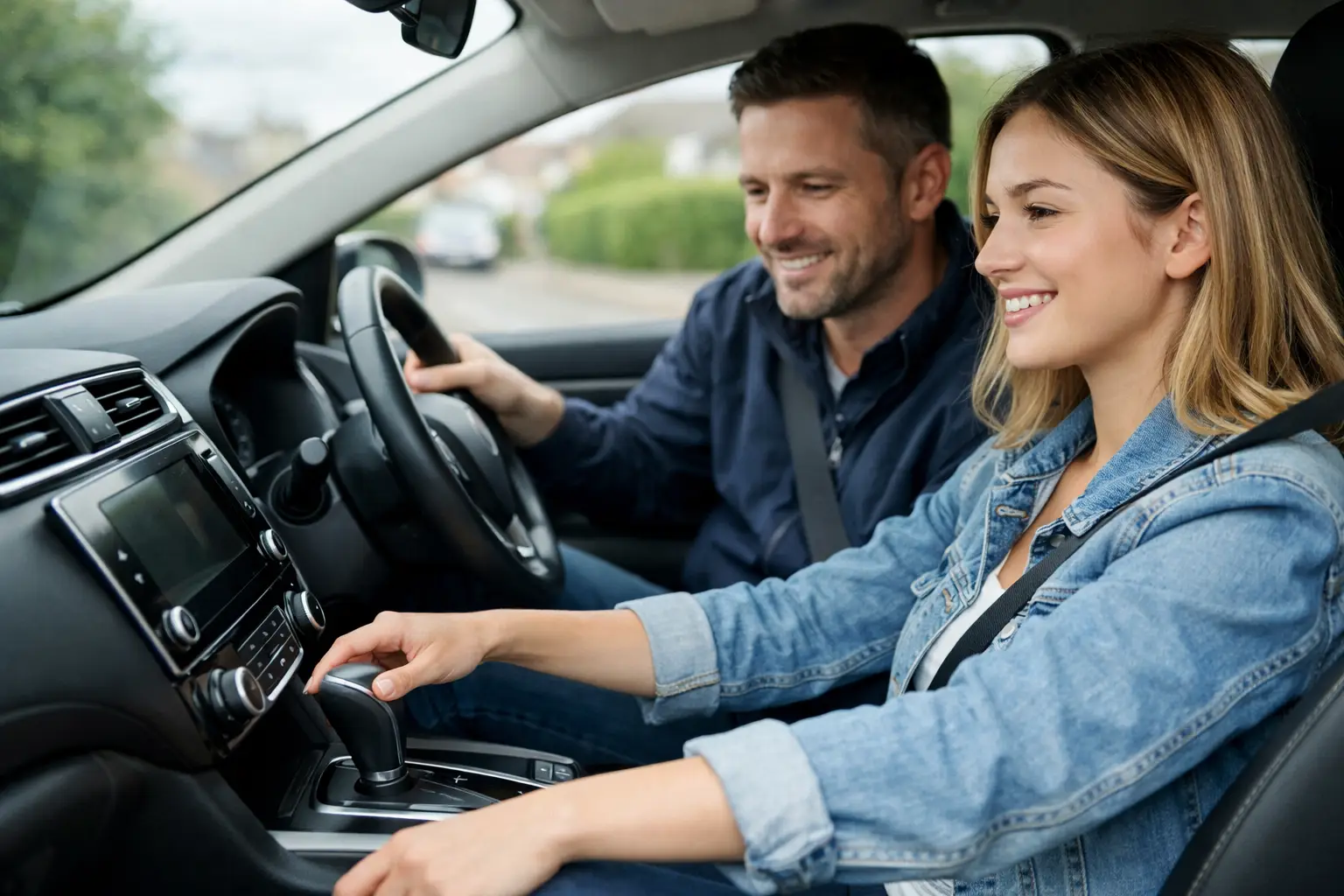
Some learners sit in the driver’s seat for the first time and think, “I can do the road part, but do I really need the gears as well?” That is exactly why automatic lessons Whittlesey learners choose are often the right starting point. If your goal is to feel calm, make steady progress and get test-ready without wrestling a clutch every five seconds, automatic can be a very sensible choice.
For plenty of people, learning in an automatic removes a big chunk of early stress. You are not juggling clutch control, gear changes, stalling and road position all at once. That means more headspace for the things that really matter - reading the road, making safe decisions and building confidence that lasts beyond the test.
Why automatic lessons in Whittlesey suit many learners
Automatic cars are often a strong fit for nervous beginners, adult learners returning to driving and anyone who wants a simpler route into independent travel. That does not make them the easy option in a lazy sense. You still need good observation, sound judgement, proper control and safe habits. The test standard is still the test standard.
What changes is the learning experience. Because the car manages the gear changes for you, lessons can feel less crowded from the start. Many pupils find they settle quicker at junctions, move off more confidently and cope better in traffic. If you have ever worried about rolling back on a hill or stalling at a busy roundabout, automatic lessons can take some of that pressure away.
Whittlesey is a good place to build those skills gradually. Learners can meet a useful mix of quieter roads, residential areas, changing speed limits and the sort of everyday traffic that teaches proper planning. You are not learning in a bubble. You are learning in the kind of conditions you will actually drive in when nobody is sitting next to you offering reassurance.
What you actually learn on automatic lessons Whittlesey pupils book
A good automatic lesson is never just “drive round for an hour and hope for the best”. Progress comes from structured teaching that matches your current level. For a complete beginner, that usually starts with moving away safely, steering control, stopping smoothly, mirrors, signals and road position. Once those basics feel more natural, lessons move into meeting traffic, junctions, roundabouts, pedestrian awareness and planning ahead.
As confidence grows, the focus shifts. You might work on dual carriageways, bay parking, parallel parking, pulling up on the right, independent driving and handling busier routes without feeling rushed. If your test is getting closer, sessions should become more targeted. That means identifying patterns in your driving, tightening up weak spots and building consistency rather than doing random practice.
That tailored approach matters. No two learners are the same. One person needs extra time on roundabouts. Another is perfectly fine with traffic but hates parking. Someone else can drive neatly for forty minutes, then falls apart the second a sat nav appears. A patient instructor spots those patterns and adjusts the lesson plan so progress is measurable, not guesswork.
Is automatic the right choice for you?
Sometimes the answer is clearly yes. If you know you are likely to drive an automatic after passing, there is no great prize for making life harder during lessons. If nerves are your main barrier, reducing the technical workload can help you settle and learn more effectively.
There are, however, trade-offs. Passing in an automatic means your licence only covers automatic cars unless you later pass another test in a manual. For some learners that is irrelevant, especially as more drivers now choose automatic and many newer vehicles use it. For others, it is worth thinking about cost, flexibility and the types of cars they may want to use in future.
This is where honesty helps. If manual lessons have left you frustrated, overwhelmed or stuck in a cycle of stalling and stress, switching to automatic is not giving up. It is choosing the method that helps you become a safer, more confident driver. On the other hand, if you are doing well in a manual and simply having the usual learner wobbles, it may still suit you to continue.
How personalised teaching makes a difference
The best lessons are calm, clear and adapted to the person in the seat. That sounds simple, but it changes everything. A learner who is anxious needs a different pace from someone who wants a brisk, test-focused plan. A teenager with no road experience may need concepts broken down differently from an adult who has spent years as a passenger and already reads traffic well.
Instructor-led, one-to-one tuition matters here. You are not sharing your time. You are not being pushed through a fixed script because it suits a timetable. You get coaching that responds to your mistakes, your strengths and the way you learn best.
That also means progress can be seen early. It may be smoother starts, better mirror checks, calmer junction routines or simply the fact that you no longer grip the steering wheel as if it has personally offended you. Small wins count because they build trust in your own ability.
A lot of learners do not need more pressure. They need better guidance. There is a big difference between being told you got something wrong and being shown why it happened, then given a practical way to put it right next time.
What to expect from your first few automatic lessons
The first lesson is usually less dramatic than most people imagine. You are not expected to arrive knowing what every pedal does or glide through town like you have been driving for years. Early sessions should feel manageable. You will be talked through the controls, basic safety checks and how the car responds. Then you build from there.
In an automatic, many beginners are pleasantly surprised by how quickly they can focus on the road itself. Without the extra layer of gear work, attention can go into mirrors, steering, road signs and planning. That tends to make lessons feel more productive, especially for nervous learners.
By lesson three or four, many pupils are already developing routines. Not perfect routines, obviously - if learners were perfect, driving instructors would all be out of a job - but recognisable habits that make the next step easier. Confidence often grows when driving starts to feel less like a series of emergencies and more like a skill you can actually learn.
Choosing lessons that help you pass and drive well
A driving test matters, but passing is not the whole job. Good automatic lessons should prepare you for real driving after the L plates come off. That means learning how to stay calm when a junction gets busy, how to recover after a mistake and how to make safe decisions when nobody is prompting you.
When comparing options, look beyond the word “automatic”. Consider whether lessons are one-to-one, whether the teaching is adapted to your level and whether there is a clear plan for progress. Time blocks can matter as well. Some learners do well with one-hour sessions. Others benefit from 90 minutes or two hours because it gives them time to settle in, practise properly and finish on a strong note.
Clear pricing helps too. So does an instructor who explains things in plain English, keeps lessons purposeful and creates an environment where questions are welcome. You are learning a life skill, not auditioning for a motoring documentary.
For learners who want that mix of patience, structure and measurable progress, D4Driving School of Motoring focuses on personalised tuition designed to build confidence from the first lesson onwards.
Building confidence without rushing it
Confidence is not bravado. It is not pretending you are fine when a mini-roundabout has just scrambled your brain. Real confidence comes from repetition, understanding and a lesson pace that stretches you without tipping you into panic.
That is why automatic lessons work so well for many people. They strip out one layer of complexity and let you improve the parts of driving that keep you safe every day. Observation. Anticipation. Speed control. Positioning. Decision-making. Those skills matter whether the car changes gear for you or not.
If you are in Whittlesey and you have been putting lessons off because you feel nervous, unsure or convinced everyone else will learn faster than you, take that thought with a pinch of salt. Most good drivers did not start out confident. They started out uncertain, made a few clumsy mistakes and improved because somebody taught them properly.
The right lesson plan will not try to turn you into a different kind of learner. It will work with the learner you already are, then help you move forward one clear step at a time. That is usually how progress becomes real - and how driving starts to feel less intimidating and a lot more possible.