
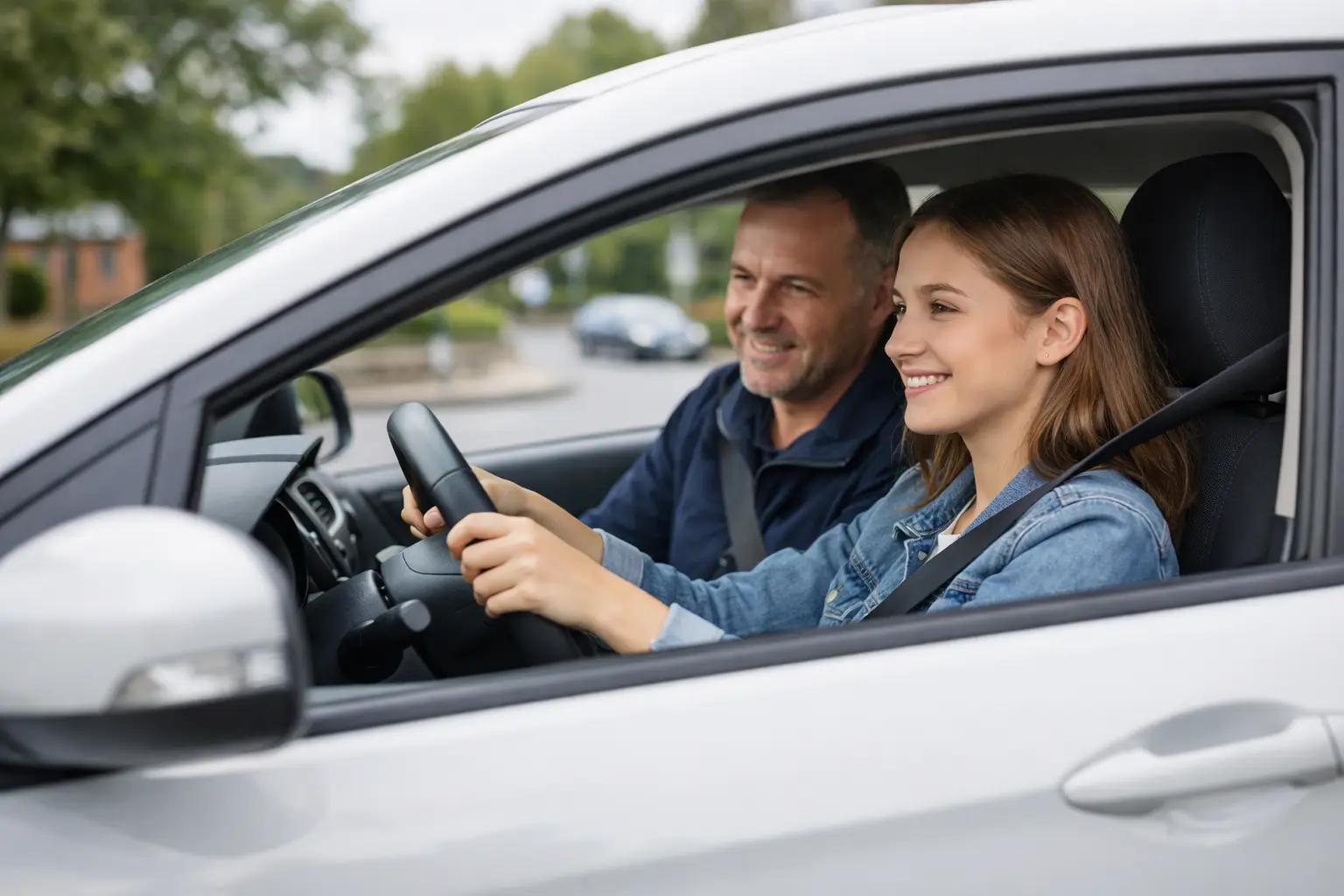
Some learners are excited for their first lesson. Others would rather volunteer to parallel park in the rain than make that first booking. Both are normal. If you are looking for driving lessons Kettering, the real question is not just who has availability - it is who can help you feel calm, make steady progress and turn nervous starts into confident driving.
A good lesson should never feel like being thrown in at the deep end. You want clear instruction, honest feedback and a plan that fits how you learn. For some people that means taking things slowly at first. For others it means getting straight into busier roads once the basics are there. The best teaching adapts to the learner, not the other way round.
What good driving lessons in Kettering should feel like
Driving lessons are not simply about covering a checklist until test day appears on the calendar. They are about building habits that keep you safe, aware and in control. That starts with the atmosphere in the car.
A patient instructor makes a bigger difference than many learners realise. When you know you can ask the same question twice without feeling silly, you learn faster. When mistakes are corrected calmly rather than dramatically, your confidence grows properly rather than wobbling from one lesson to the next.
That matters even more if you are a nervous beginner, returning to driving after a long break, or switching from manual to automatic. Confidence is not built by pretending everything is easy. It comes from practising the tricky bits until they stop feeling quite so tricky.
In Kettering, dedicated test preparation can also be a smart option if you already have experience but need focused work on local roads, decision-making and manoeuvres. That is especially useful for learners who are close to test standard but need cleaner, more consistent driving under pressure.
Driving lessons Kettering learners actually benefit from
The most useful lessons are tailored from the first session. There is no prize for learning at somebody else’s pace. A complete beginner will need a different structure from someone who has had lessons before, and both deserve teaching that meets them where they are.
If you are new to driving, your early lessons should focus on understanding the car, moving off safely, stopping smoothly, steering accurately and reading the road ahead. You do not need to master everything in one go. In fact, trying to cram too much into the first few sessions usually slows progress.
If you already have some experience, lessons should quickly identify what is holding you back. Sometimes it is clutch control. Sometimes it is roundabouts. Sometimes it is not skill at all, but nerves making everything feel harder than it is. A good instructor spots the difference and adjusts the plan.
This is where one-to-one tuition really earns its keep. You are not getting a generic script. You are getting feedback based on your decisions, your strengths and the areas that need work. It is personalised teaching done right, and it saves a lot of wasted time.
Manual or automatic - which is right for you?
This depends on your goals, your confidence and how quickly you want to get on the road. Manual lessons give you more flexibility once you pass, because a manual licence lets you drive both manual and automatic cars. For some learners, that wider choice is worth the extra challenge.
Automatic lessons can be a very sensible choice if gear changes and clutch control are adding stress that gets in the way of learning the road. There is no shame in making driving simpler. For many people, especially nervous learners or busy adults returning to lessons, automatic gives them the headspace to focus on observation, planning and safe decision-making.
Neither option is automatically better. It depends on what helps you become a safe, confident driver. The right instructor will talk that through honestly rather than pushing a one-size-fits-all answer.
Lesson length matters more than you think
Not every learner gets the best results from the same lesson length. A one-hour lesson can be ideal if you are just starting out, get mentally tired quickly, or want time to absorb each step without overload.
An hour and a half often gives a nice balance. There is enough time to settle in, practise a few key skills and work on real traffic situations without feeling rushed. Two-hour lessons can be brilliant for more advanced learners, especially those preparing for test routes or wanting to cover a wider range of roads in one session.
Longer is not always better. If concentration drops after 70 minutes, a two-hour lesson may simply mean 50 minutes of diminishing returns. Again, it depends on the learner.
How to spot a driving school that suits you
Price matters, of course. Most people are not shopping for lessons with unlimited funds and a mysterious winning lottery ticket. But the cheapest lesson is not always the best value if progress is slow, inconsistent or confidence takes a knock.
Look at how the tuition is described. Is it clearly one-to-one? Are the lesson lengths straightforward? Is there a sense that teaching is adapted to the learner rather than delivered from a fixed script? Those details tell you a lot.
You should also pay attention to tone. If the messaging feels pushy or impersonal, the lessons may feel the same. A supportive instructor-led approach usually comes through in how a school talks about learners - with patience, clarity and a focus on progress rather than pressure.
Transparent pricing helps too. It removes uncertainty and lets you plan properly. When you know what a one-hour, 90-minute or two-hour lesson costs, it is easier to choose what fits both your budget and your learning style.
What to expect as you get closer to test day
By the time your practical test is approaching, lessons should become more focused and more precise. This is not about panicking and trying to fix everything at once. It is about polishing the details that matter.
That usually includes independent driving, roundabouts, lane discipline, mirrors, speed awareness and keeping your decisions calm when things change suddenly. A learner can drive quite well in familiar conditions but still need more work on consistency. Test preparation is often about making good habits dependable, not learning them from scratch.
Dedicated driving lessons in Kettering can be especially useful here if your test is based locally. Knowing the area does not mean memorising routes like a script. It means becoming comfortable with the kinds of roads, layouts and traffic situations you are likely to meet. That familiarity can take some of the sting out of test-day nerves.
If you are feeling anxious, that is completely normal. Most learners do not float into their practical test feeling like a motoring superhero. The goal is not to feel fearless. The goal is to know you can drive safely and recover well if something unexpected happens.
Progress should be visible, not vague
One of the most frustrating parts of learning to drive is feeling as though you are working hard but not really knowing whether you are improving. Good tuition solves that. You should come away from lessons understanding what went well, what needs more work and what the next step is.
That sense of measurable progress matters because motivation is easier to keep when you can see movement. One week you are hesitating too much at junctions. A few lessons later, you are judging gaps more confidently and planning earlier. That is real progress, and it builds momentum.
At D4Driving School of Motoring, that personalised approach is central to how lessons are delivered. The aim is not simply to get learners through a test, but to help them become safe, capable drivers with confidence that lasts beyond the pass certificate.
A few signs you are ready to book
You do not need to wait until you feel completely ready. Most learners book because they are ready enough to begin, not because every nerve has vanished.
If you want calm, one-to-one support, clear lesson options, and teaching that works around your skill level rather than against it, that is usually your sign. If you are preparing for a test in Kettering and want focused practice with an instructor who values safety, patience and real progress, that is another.
Driving gives you more than a licence. It gives you options - getting to work more easily, helping family, planning your own trips, or simply not having to organise your life around lifts and bus times. That freedom starts with the right first lesson, and often with the simple decision to stop putting it off.