
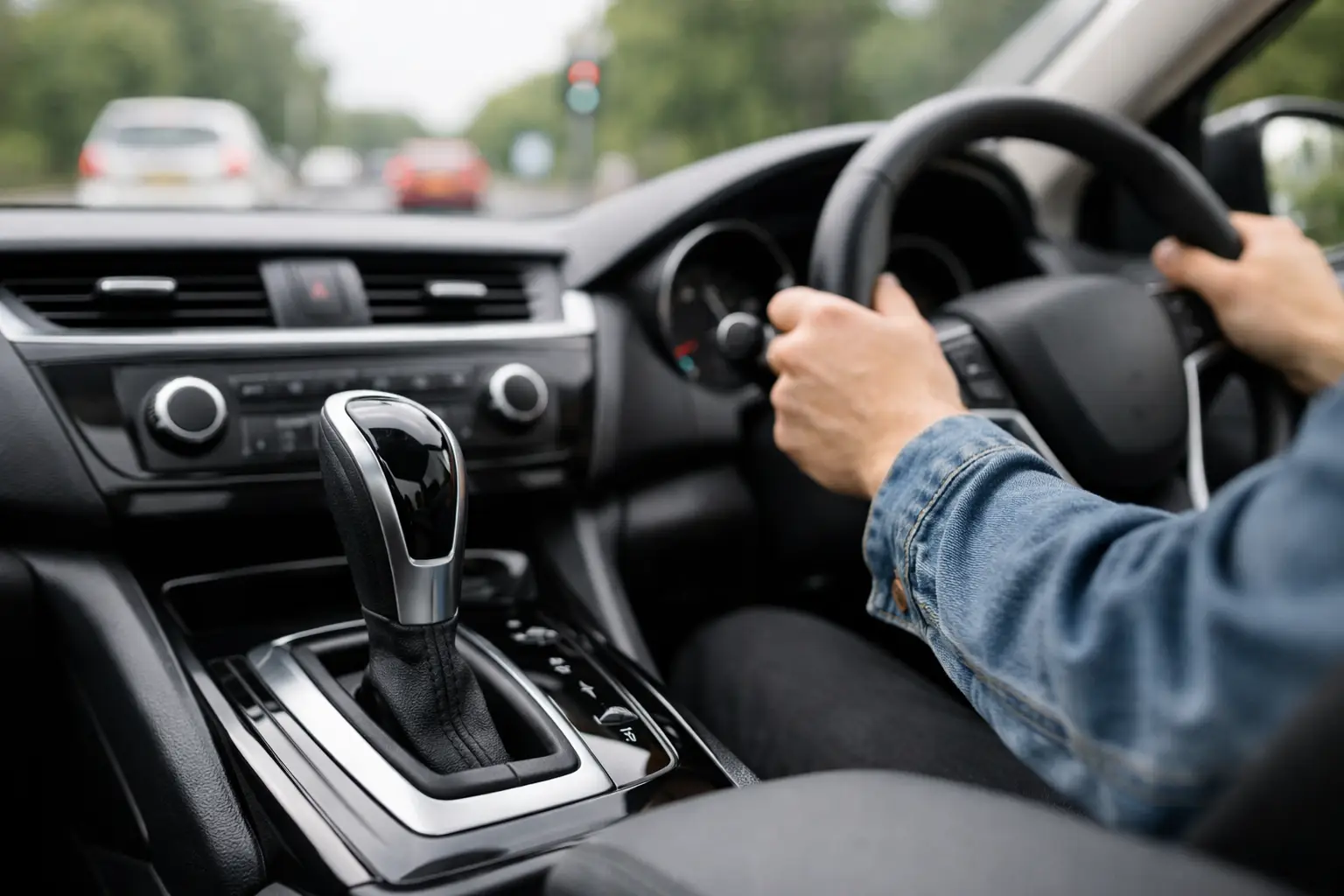
A busy roundabout, stop-start traffic and the pressure of getting the clutch right can make the first few driving lessons feel like you have been asked to pat your head, rub your tummy and perform a hill start at the same time. If you are asking, “is automatic licence worth it?”, the honest answer is: often, yes - but it depends on what you need from driving after you pass.
An automatic licence can be the right route for nervous beginners, busy adults and learners who want to focus their attention on the road rather than gear changes. It is not a shortcut around safe driving or the theory test. You will still need to show good judgement, observation and control. It simply removes one major mechanical task from the learning process.
What an automatic licence lets you drive
Passing your practical test in an automatic car gives you an automatic-only licence. You can legally drive automatic vehicles, including electric cars, but not a manual car. If you pass in a manual, you can drive both manual and automatic cars.
That restriction is the main decision point. Before choosing lessons, think about the car you are likely to use after passing. If your household has an automatic, or you expect to buy one, an automatic licence may fit your plans perfectly. If you may need to borrow a parent’s manual car, share a manual vehicle with a partner, or want the widest choice of cheaper used cars, a manual licence offers more flexibility.
You can upgrade later. Once you have passed in an automatic, you can take a practical test in a manual car to gain a full manual entitlement. You do not need to treat your first choice as a lifelong commitment, although it is usually simpler and less expensive to learn manual from the start if you know you will need it.
Is an automatic licence worth it for nervous learners?
For many people, this is where automatic lessons really earn their place. Without a clutch pedal or gear lever to manage, you have more mental space for steering accurately, checking mirrors, judging gaps and reading what other road users are doing.
That can be particularly helpful when you are learning a new junction layout, dealing with busy Peterborough traffic, or building confidence on faster roads. Instead of worrying about stalling as the lights change, you can concentrate on moving away safely and calmly.
Automatic driving is not effortless. You still need smooth acceleration and braking, appropriate road position, effective observations and sound decision-making. The examiner expects exactly the same safe, independent driving standard. But removing clutch control can make the early stages feel less overwhelming.
A patient instructor should never make you feel that choosing automatic means you are taking the easy option. You are choosing a learning environment that may help you make stronger progress. For some learners, manual gears become natural quite quickly. For others, they remain the one task that steals attention from everything else. Personalised tuition is about recognising the difference.
The cost question: lessons, cars and time
It is tempting to assume automatic is always cheaper because some learners need fewer lessons. That is not guaranteed. Everyone learns at a different pace, and the number of lessons you need depends on previous experience, confidence, regular practice and how consistently you can learn.
Automatic lessons can sometimes cost a little more because automatic tuition cars are often more expensive to buy and maintain. Automatic cars may also cost more to purchase, hire or insure, especially for new drivers. On the other hand, if learning automatic helps you stay calmer, retain skills more easily and reach test standard with fewer repeated lessons, the overall cost may work out well for you.
The best question is not simply, “Which is cheaper per hour?” Ask which option gives you the best chance of learning safely, steadily and without losing motivation. A lesson that leaves you feeling capable is worth more than a slightly cheaper lesson spent fighting the clutch every week.
Automatic versus manual on the driving test
The practical driving test is the same length and follows the same format whether you take it in a manual or automatic car. You will be assessed on safety, control, awareness, manoeuvres, independent driving and your ability to respond to the road around you.
In an automatic, you will not be marked on changing gears or clutch control because those tasks are not required. That does not mean the test is easy. Moving off safely, choosing an appropriate speed, planning ahead and reacting to hazards still matter just as much.
Some learners find automatic test preparation more straightforward because there are fewer actions to coordinate at complex junctions or when pulling away uphill. This can allow more time for mock tests, tricky routes and polishing the habits that make a driver safe after test day, not merely passable for forty minutes.
If test nerves are holding you back, the right answer may be automatic. If you are comfortable with gears and have a realistic reason to need a manual licence, sticking with manual could be sensible. The key is to make the decision based on your actual driving goals, not on what friends say you “should” do.
Will automatic cars become the normal choice?
Electric vehicles are automatic, and more drivers are choosing automatic petrol, diesel and hybrid cars too. That trend makes an automatic-only licence more practical than it was years ago. For many learners, especially those planning to own an electric or hybrid vehicle, the manual restriction is unlikely to cause a problem.
Still, manual cars have not disappeared. They remain common in family driveways, among lower-priced used cars and in some work vehicles. If you are keeping your options open for a first car, a job that involves driving, or occasional access to another person’s vehicle, that broader entitlement has value.
Try not to choose manual purely because it feels like the traditional route. Equally, do not choose automatic solely because it sounds quicker. Think about the next two or three years: where you will drive, what you can afford to run and whether being able to use a manual car would make a genuine difference.
A practical way to decide
If you are unsure, start with an honest conversation about your confidence, previous experience and goals. A short automatic lesson can show you whether removing gears helps you settle into driving. A manual lesson can reveal whether clutch control feels manageable with calm, structured coaching.
Consider automatic if you are highly anxious about stalling, have struggled repeatedly with clutch control, need to pass for a clear reason and expect to drive an automatic car. Consider manual if flexibility matters, you have access to a manual car for practice, or gears are challenging but not stopping you from progressing.
There is no prize for making lessons harder than they need to be. At D4Driving School of Motoring, the aim is to match lessons to your learning style, build confidence at the right pace and help you become a safe driver who can make good decisions independently.
Your licence should support your freedom, not become another source of pressure. Choose the car and lesson plan that lets you learn with confidence, then give yourself enough time to turn that confidence into calm, safe driving.