
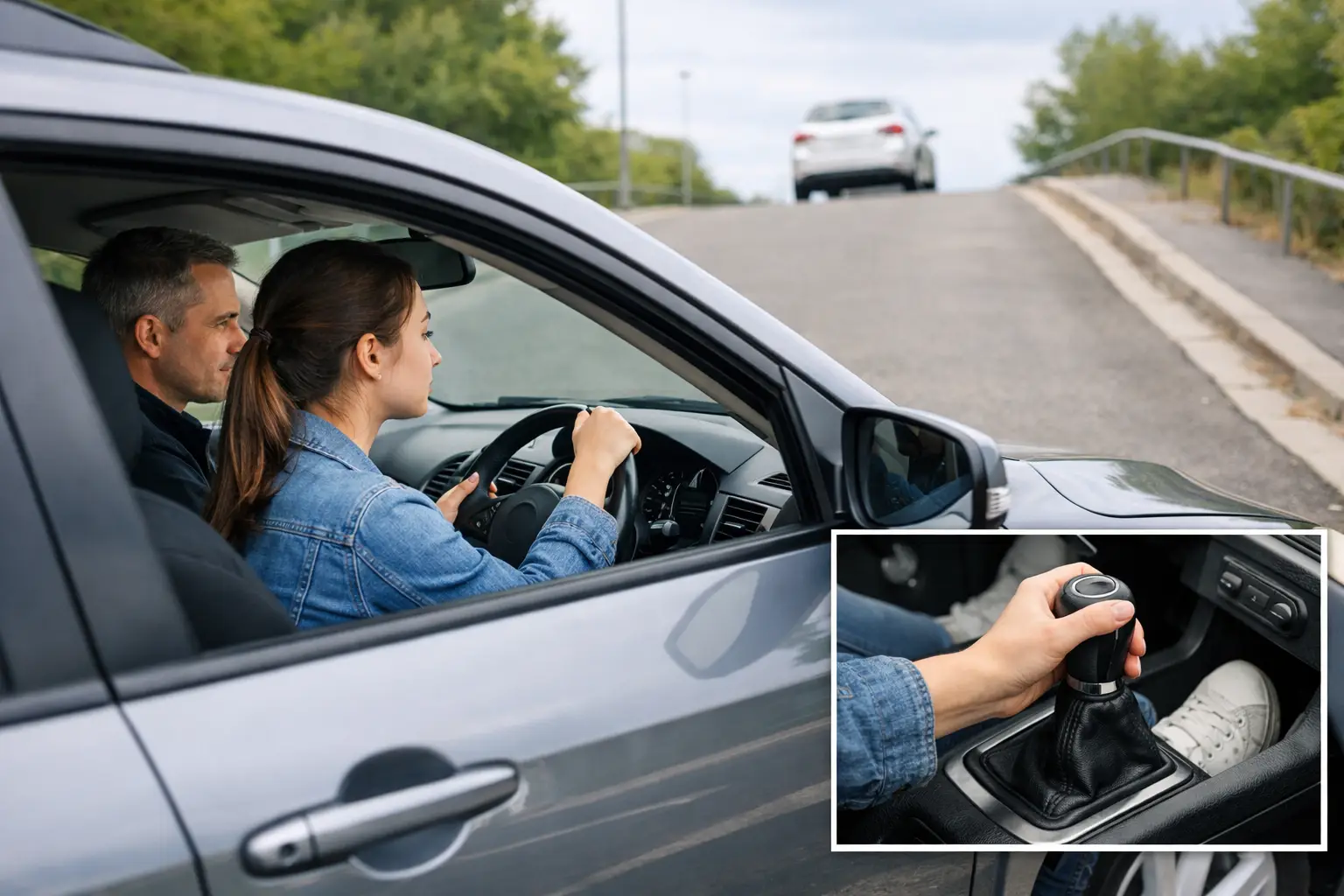
That moment when the car rolls back a touch on a hill can make even a calm learner tense up. If you are looking for manual driving lesson hill start practice tips, the good news is that hill starts are not about bravery or quick reactions. They are about timing, control and repeating the same calm routine until it feels natural.
For many learners, hill starts feel harder than they really are because there is more to coordinate in a short space of time. You are managing clutch control, a little petrol, the handbrake, road position and observation together. The pressure often comes from the fear of holding up traffic behind you, but in a lesson the priority is not speed - it is doing it safely and correctly.
Why hill starts feel difficult at first
A hill start adds one extra challenge that a flat-road move-off does not. Gravity is trying to pull the car backwards, so your clutch control needs to be more accurate. If the clutch comes up too quickly, the car may stall. If the handbrake comes off too soon, the car may roll back. If too much gas is added, the car may surge forward.
That sounds like a lot, but it becomes simpler when you break it down. You are not learning a new mystery skill. You are using the same move-off routine you already know, just with better clutch control and steadier preparation.
It also helps to remember that different cars behave differently. Some cars have a very clear bite point. Others need more petrol or a slower clutch lift. That is why personalised tuition matters. A good instructor will help you learn what this specific car is asking from you, rather than expecting the same response every time.
Manual driving lesson hill start practice tips that really help
The best way to improve hill starts is to make the process repeatable. Nerves often make learners rush, so the first goal is to slow the routine down in your mind.
Set the car up properly before moving
Before you even think about moving off, secure the car with the handbrake and prepare early. Select first gear, check your mirrors, and get your feet ready in a calm order. If you try to do everything at once, the car will feel ahead of you. If you prepare first, you stay in control.
Your seating position matters here too. If you are too far from the pedals, clutch control becomes much harder. You need to be close enough to press the clutch fully down without stretching and comfortable enough to lift it gradually with control.
Learn the bite point, do not guess it
The bite point is the heart of a good hill start in a manual car. Bring the clutch up slowly until you feel the car want to move. You may notice the front of the car lift slightly or hear the engine note change. That is the point where the car is ready to work against the slope.
A common mistake is lifting the clutch too quickly because you want to get moving. Another is stopping short of the bite because you are worried about stalling. Both are normal in early lessons. What matters is learning the feel of the car, not snatching at the pedals.
Add enough gas to support the engine
On a hill, the engine usually needs a little more support than it would on flat ground. Gentle pressure on the accelerator helps the car pull away smoothly. Too little gas can lead to a stall. Too much can make the move-off jerky and increase anxiety.
There is no perfect number that suits every car or every hill. A steeper hill may need slightly more acceleration. A smaller car may respond differently from a larger one. This is where practice in a few different locations can help, starting on a mild incline and building up when your confidence improves.
Keep the handbrake on until the car is ready
Many learners worry that the handbrake is slowing them down. In fact, it is there to help you. Holding the car still with the handbrake gives you time to find the bite point and set the gas without rolling backwards.
When the car feels ready to move, release the handbrake smoothly and continue bringing the clutch up with control. If you release the handbrake before the car is prepared, rollback becomes much more likely. Think of the handbrake as part of the routine, not a last-second extra.
Hill start practice tips for staying calm under pressure
Traffic can make hill starts feel worse than they are. A car close behind, a busy junction or a queue at traffic lights can all make a learner feel rushed. The important thing is not to let someone else's impatience change your routine.
Use the same sequence every time
Confidence grows when the process stays familiar. Mirrors, signal if needed, clutch down, first gear, find the bite, set the petrol, final observation, release handbrake, move away. The order may be taught slightly differently by different instructors, but consistency is what makes it reliable.
If your routine changes every time, your brain has to start from scratch on each attempt. If it stays the same, your body begins to remember it.
Expect a few imperfect attempts
Learners often think one stall or rollback means they are bad at hill starts. It does not. It means you are learning. Small mistakes are useful when they are corrected early because they show exactly where the timing needs work.
A patient instructor will not just say, "Try again." They will explain whether the issue came from the clutch, gas, handbrake timing or observation. That kind of feedback speeds progress because you are not left guessing.
Practise on the right hill at the right stage
Not every hill is suitable for early practice. Starting on a very steep hill in busy traffic can knock confidence quickly. It is usually better to begin on a gentle slope with enough space and less pressure, then move on to more demanding situations.
For learners around Peterborough, where some areas are flatter than others, instructors may need to choose practice routes carefully so hill work still feels realistic and useful. The setting matters more than people think.
Common hill start mistakes and how to fix them
One of the most common mistakes is trying to move off with too little preparation. If the mirrors are not checked, the gear is not selected or the feet are not set correctly, the whole move becomes rushed. Slowing down before the move-off usually fixes half the problem.
Another frequent issue is bringing the clutch up too high before the handbrake is released, then panicking and dipping the clutch again. That hesitation can lead to inconsistent movement. Instead, pause at the bite, hold it steady, and trust the setup.
Some learners also look down at the pedals. That is understandable at first, but it takes your attention away from the road and your surroundings. Pedal control needs to become something you feel rather than something you watch.
Then there is overthinking. On a hill, learners sometimes focus so much on not rolling back that they forget observations. Safe driving always comes first. A tidy hill start matters, but only if the decision to move is safe.
How to make progress between lessons
If you are learning in regular manual lessons, ask your instructor to revisit hill starts more than once rather than treating them as a one-off topic. Repetition across different roads, weather conditions and traffic levels builds genuine confidence.
It can also help to talk through the routine out loud. That may feel odd, but saying each step quietly to yourself can reduce panic and keep your actions in order. Over time, the routine becomes automatic and you will not need to verbalise it.
If nerves are a big factor, shorter focused practice can work better than long sessions of repeated attempts. A few good hill starts done calmly are often more useful than twenty rushed ones. Progress is not about cramming. It is about building the right habits.
At D4Driving School of Motoring, this is exactly why lessons are tailored to the learner rather than rushed through a fixed plan. Some people only need a quick refresher on clutch control. Others need more time to build confidence before tackling steeper hills or busier junctions. Both approaches are valid.
What examiners are really looking for
In the driving test, a hill start is not about showing off perfect speed. The examiner wants to see control, safety and a smooth move-off with little or no rollback. A brief pause while you prepare properly is absolutely fine.
You will not be marked down for taking a moment to set the car correctly. You are far more likely to lose marks by rushing and making the car unstable. Calm, planned driving nearly always looks better than hurried driving.
If hill starts worry you, remember that confidence usually arrives after the routine becomes familiar, not before. You do not wait until you feel fearless. You build confidence by practising the same safe method until the car, the slope and your timing start to work together. One clean move-off at a time is enough to change how the whole hill feels.