
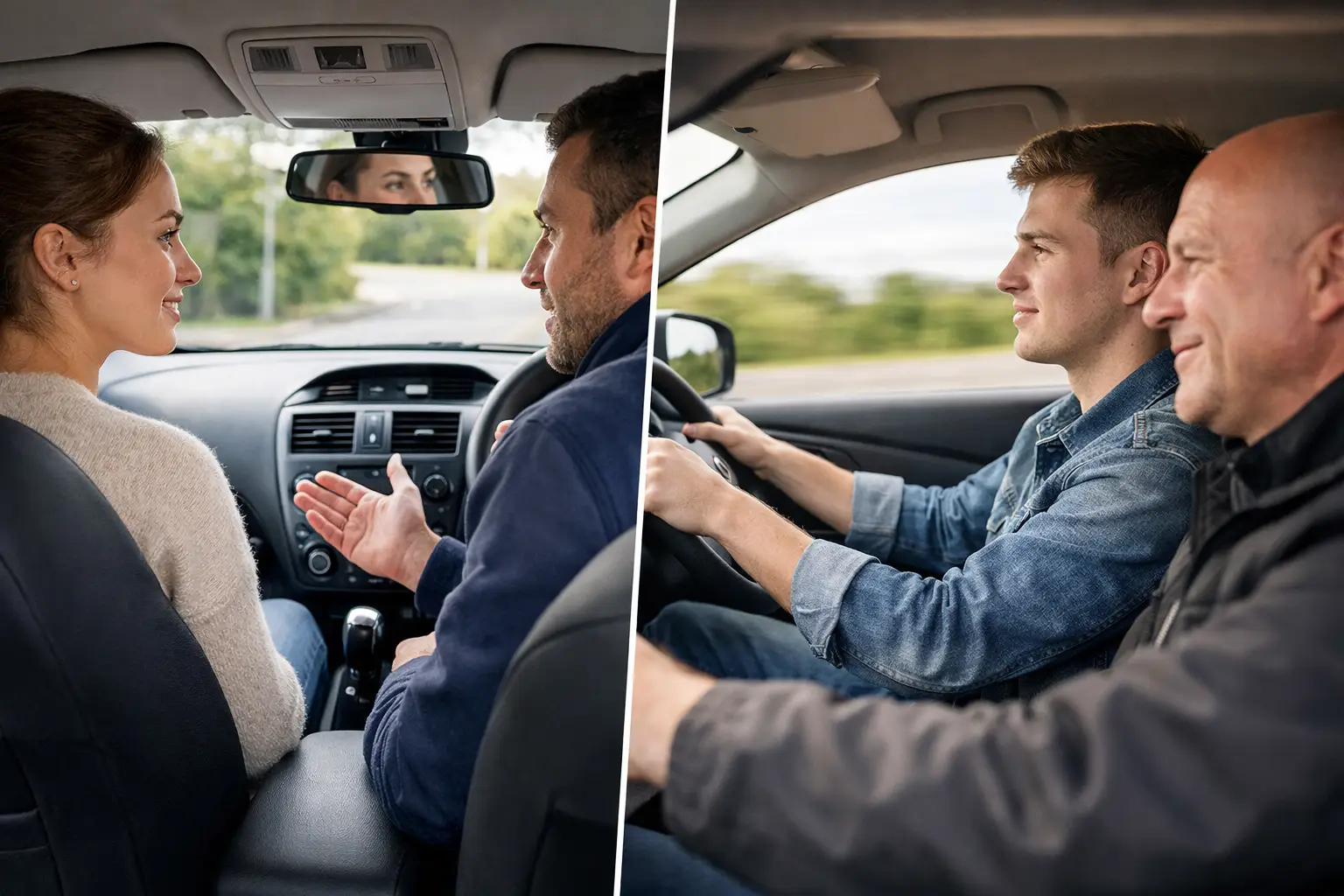
You can learn a lot about a driving lesson from the last ten minutes. In a one hour slot, that final stretch often arrives just as things are clicking. In a two hour session, it can be the point where a learner settles, repeats a skill properly, and finishes feeling more capable than when they started. That is why one hour vs two hour driving lessons is not just a timetable question. It is really about how you learn best, how confident you feel, and what helps you make steady progress without frying your brain.
For some learners, one hour is the sweet spot. It is focused, manageable, and easier to fit around college, work, school runs, or life generally being a bit chaotic. For others, two hours gives enough time to warm up, tackle something new, make mistakes safely, and then do it again until it feels far less mysterious.
One hour vs two hour driving lessons - what really changes?
The obvious difference is time, but the more important difference is what that time allows. A one hour lesson tends to be tighter and more targeted. There is less room for drifting off topic, which can be helpful if you are working on one clear skill such as moving off smoothly, clutch control, roundabouts, or bay parking.
A two hour lesson gives more breathing space. You can cover a wider route, face more traffic situations, and build repetition into the same session. That matters because confidence usually does not come from hearing an explanation once. It comes from doing the thing again, with calm guidance, until your shoulders drop and the car stops feeling like a puzzle.
Neither option is automatically better. The best choice depends on your stage, your concentration, and your goals.
When one hour lessons work best
If you are a complete beginner, one hour can be a very sensible place to start. Early lessons involve a lot of new information - mirrors, pedals, steering, observations, road position, and trying not to feel as though every parked car is judging you. Shorter sessions can make that feel more manageable.
One hour lessons also suit learners who get mentally tired quite quickly. Driving is not passive. Even when the car is moving smoothly, your brain is constantly scanning, deciding, adjusting, and remembering what your instructor said thirty seconds ago. If your focus starts to dip after forty or fifty minutes, stretching it to two hours can become less productive.
They are also useful for maintenance and consistency. If you are already driving at a decent standard, a weekly one hour lesson can keep momentum going without taking over your whole afternoon. For busy adults, that can be the difference between continuing lessons and putting them off for another month.
There is another practical advantage. One hour lessons can feel less daunting for nervous learners. Booking a shorter session often feels easier than committing to a full two hours, especially if the idea of driving already makes your stomach do gymnastics.
When two hour driving lessons make more sense
Two hour lessons come into their own when you want depth rather than a quick check-in. By the time you have settled in, adjusted the seat, recapped the previous lesson, and driven to an area that suits the day’s goal, a one hour session can disappear quickly. With two hours, you have time to actually build on the skill, not just introduce it.
This is especially useful once you move past the earliest basics. If you are practising independent driving, tackling complicated roundabouts, handling dual carriageways, or preparing for the practical test, longer sessions often lead to stronger progress. You can link skills together in a more realistic way, which is exactly what happens on real roads.
Two hour lessons are often helpful for test preparation too. Mock tests, route planning, dealing with faults, and then correcting those faults all take time. If a learner makes the same mistake three times in one hour because they are rushing, they usually feel frustrated. If they have two hours, there is a better chance of turning that mistake into a proper improvement before they go home.
Longer lessons can also suit learners who travel from nearby areas into Peterborough for lessons or test preparation. If you are making the journey anyway, a two hour session often gives better value from the time you have set aside.
The trade-off - progress vs concentration
This is where an honest conversation matters. Two hour lessons can lead to faster progress, but only if you can stay switched on. If the second hour becomes a fog of missed mirrors and vague nodding, it is not really helping.
On the other hand, one hour lessons can keep you fresh, but they may slow down progress if every session feels like stop-start learning. Sometimes a learner spends the first twenty minutes finding their rhythm and the last ten minutes wrapping up. That leaves a fairly small window for meaningful practice.
The right choice often comes down to whether you learn better in short, regular bursts or longer, more immersive sessions. There is no gold star for choosing the longer option if it does not suit you. The aim is progress you can actually keep.
One hour vs two hour driving lessons for different learners
A nervous beginner often benefits from starting with one hour lessons, then moving up later. That keeps the pressure low while the basics become familiar. Once confidence grows, a longer lesson can help them stitch everything together.
A learner who has already had some experience, perhaps in a manual or automatic, may get more from two hours because they are ready to practise more independently. They usually need less time to settle and can use the extra hour well.
Adult returners are a mixed bunch. Some love a one hour lesson because it fits around work and family life and does not feel overwhelming. Others prefer two hours because they want proper time to rebuild confidence after years off the road. It depends less on age and more on mental stamina and current confidence.
Pre-test learners often do well with longer sessions, especially close to the test date. That does not mean every lesson must be two hours, but a few well-planned longer sessions can make a real difference when polishing weak areas.
Cost matters, but value matters more
It is completely reasonable to think about price. Driving lessons are an investment, and most learners are balancing them alongside everything else. A one hour lesson may feel more affordable week to week, and that can make learning more sustainable.
But the cheapest lesson is not always the best value. If two hours helps you progress more efficiently, retain more, and need fewer lessons overall, it may work out better in the long run. Equally, if one hour keeps you relaxed and consistent, that may be the smarter spend for you.
A good instructor should help you judge this properly, not push you into a lesson length that looks good on paper but does not fit your learning style. Tailored teaching matters here. Some learners thrive with longer sessions. Others improve faster when lessons are shorter and carefully focused.
How to choose the right lesson length
If you are unsure, start by asking yourself three simple questions. After about an hour of driving, do you still feel sharp? Are you forgetting previous feedback because lessons feel too short? And does your schedule realistically support one format better than the other?
If your answer is, "I am exhausted after an hour," listen to that. If your answer is, "I finally get into a rhythm and then we stop," that tells you something too.
It is also worth remembering that this does not have to be fixed forever. Plenty of learners benefit from mixing lesson lengths. You might start with one hour sessions, move to 90 minutes once confidence builds, and use two hour blocks for mock tests or intensive preparation later on. Driving lessons are not a loyalty scheme for one particular time slot.
What a good instructor looks for
A patient instructor will usually spot the pattern before you do. They will notice whether you fade after forty-five minutes, whether you need more repetition in one sitting, or whether you are progressing better with shorter, sharper goals.
That is one reason personalised tuition matters so much. At D4Driving School of Motoring, lesson planning is built around the learner rather than the diary. That means the right lesson length is chosen for progress, confidence, and safety - not because it is easier to squeeze into a schedule.
If you are choosing between one hour and two hour driving lessons, do not think of it as picking the better learner's option. Think of it as choosing the format that gives you the best chance to stay calm, improve properly, and enjoy the process at least some of the time. Because yes, learning to drive should involve concentration, but it does not have to feel like a weekly endurance event. The best lesson length is the one that helps you leave the car thinking, "I can do this."